A Couple Of Months With The Garmin Cirqa
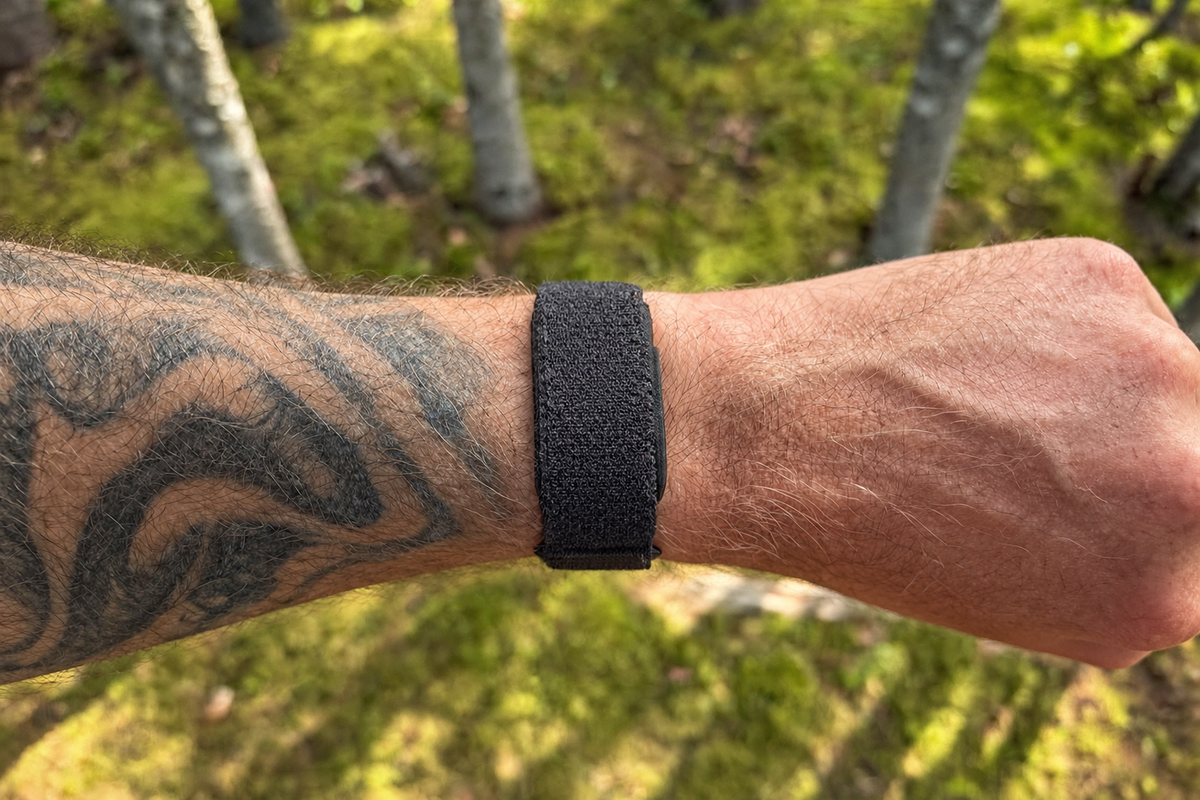
I can't remember the last time a review device landed on my doormat, so when the Garmin Cirqa turned up I will admit to a small burst of excitement. A new gadget to poke at, and one that sits right on top of the two things I spend most of my time writing about, tech and fitness. Before going any further, full disclosure, the Cirqa was sent to me for free by a third party. They have no say over anything I publish, these are my words and my opinions.
If you haven't been following the Garmin Cirqa you would be forgiven for being confused by it. Rumoured for months on end, the Whoop style screen-less band looked as if it would never appear. Polar, Amazfit and even Fitbit got there first, and for a good stretch it felt like every sports personality and fitness influencer was wearing a Whoop without the wider population having any idea what it was. Perhaps that is why Garmin kept quiet through all the leaks.
The Cirqa is an odd thing to explain to anyone. When I agreed to write this my wife and son just looked at me puzzled as I tried to describe what it was for. There is no screen and no GPS chip, just a small pod with a single button sitting in a fabric strap, yet inside it carries the same features as a high end Garmin watch. Sleep tracking with a sleep coach, Body Battery, training readiness, training status, an estimated VO2 max, all of it in a device costing a fraction of the watches those features usually live on, with no subscription needed to use any of it.
An awful lot of tech crammed into a small band.
The pod itself is plain matte black with no logo, around 15 grams on its own and about 20 with the strap, and you stop noticing it within a day. It clips into the band with quick release pins so swapping to the bicep band takes seconds. Underneath is Garmin's fourth generation heart rate sensor, the same one on plenty of current watches, with SpO2 and overnight skin temperature. There is no ECG, and it charges from the same cable as every Garmin watch I have owned, which means one lead in the bag rather than two.
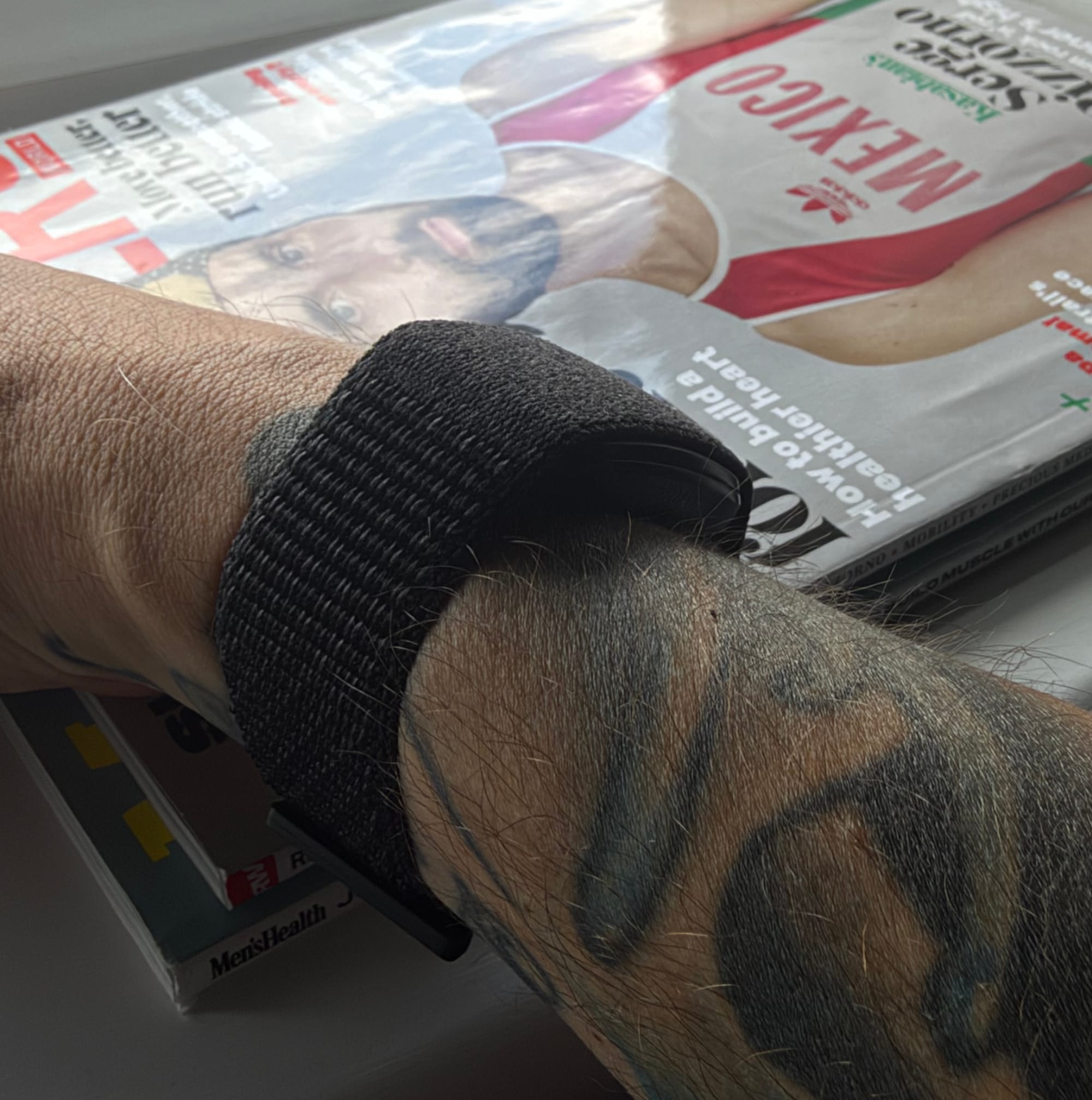
My first instinct was to call it a Whoop competitor, and I am better placed than most to judge that, having worn a Whoop for two years before the Apple Watch got replaced by a Garmin in 2023. A couple of months in, the comparison doesn't hold up. Whoop is built to live on its own, one band, one app, one subscription, a closed little world that works well enough if you buy into it, and I know all about the walls that keep you in. The Cirqa feels like an extension of the Garmin ecosystem. It can stand alone, but not well enough in my opinion, and it really comes alive next to a watch.
I have been wearing it alongside my Fenix 8 Pro the whole time. Garmin has a feature called TrueUp that has been quietly syncing multiple devices on one account for years, so there is no duplicate data to untangle. You pick a primary wearable during setup, the Cirqa asks if you want it to take the job, and everything settles itself in Garmin Connect. The only way to end up with duplicates is to manually start an activity on two devices at once, which Garmin takes as intentional. It stores up to 14 days of data on the device itself, so your phone can stay at home too.
Sleeping in it is where the band beats the watch. The Fenix is a lump on the wrist at night and the Cirqa is not, and the smart wake alarm buzzes you awake at the right point in your sleep cycle with a vibration strong enough to do the job. Tap the pod to snooze, hold it to switch the alarm off. When I am wearing just the band and no watch, the thing I miss is the flashlight.
Garmin Connect has had a small change to go with the Cirqa, a panel at the top of the app called Essentials that pins sleep, Body Battery, steps and health status where you can see them without scrolling. Everyone gets it whether they own a Cirqa or not, and it makes the app far more usable for a device with no screen. Scroll past it and the rest of Connect is the same as it is for any watch, training load, training status, readiness, all of it. About the only things missing from the spec sheet are features that need a display, and a handful of odd ones like triathlon mode. Garmin Coach works, though only on Connect Plus, and the VO2 max estimate only updates from outdoor runs where your phone is supplying GPS.
All of this works on the free tier of Garmin Connect. At launch the one catch was the live heart rate graph during an activity, which sat behind the Connect Plus paywall, and Garmin has since moved it to the free tier. Seeing it behind a paywall at all made me wince, the same instinct that had me writing about Runna's engagement bait. Paywalls creep, and I would rather they crept nowhere near my heart rate.
Activity tracking is where it falls down. On paper the Cirqa detects a workout on its own once it sees around 15 minutes of elevated heart rate, asks you in the app when it is unsure what you did, and borrows your phone's GPS to attach a route to a run you never started. In practice it has been hit and miss for two months. It misses walks, it misses the first stretch of runs, and there are enough other inconsistencies that I no longer trust it to log anything by itself, which is the whole point of a band like this. The workaround I have settled on is setting the button to a timed activity, pressing it when I start, and correcting what it was in Connect afterwards. Start one manually from the app and there are over 80 profiles to choose from, gym, running, cycling, racket sports, winter sports, and swimming, since the pod is rated to 5ATM.
I have a feeling Garmin put the button on there knowing the auto tracking was a bit lacking. None of the other bands have one, and it is the first thing you reach for once you stop believing the automatic detection.
The Cirqa can broadcast your heart rate over Bluetooth and ANT+, toggled from the app or with a long press of the button, and I want it feeding my watch, my Wahoo cycle computer and my Zwift trainer. Broadcasting chews through the battery quicker, so Garmin's claimed 10 days will take a hit, which seems a fair trade.
Who this is for still confuses me. Most people in the Garmin world work out, they run, they cycle, whatever it is, and they are used to wearing a watch to do it. The Cirqa makes sense to them as a second device, something for sleep and recovery and the days the watch stays in the drawer, and I think that is who will buy it. I haven't worn it for a triathlon or anything close to one, and I don't intend to, that is not what it is for. I can't see it pulling anyone off a Whoop band on its own. If you are happy with Whoop and have no Garmin watch, nothing here changes that. The people it will pull across are the ones already wearing a Whoop next to a Garmin, and for them the argument makes itself.
Two months in, the Cirqa is still on my wrist.

The blog of an obsessive notetaker and over thinker